Understanding Prolonged Activation State
Why repeated activation can lead to persistent symptoms throughout the body.
Prolonged Activation State (PAS) offers a different way of understanding why symptoms can persist after an illness, difficult period or other initial trigger.
The original event may have begun the process, but PAS is not the residue of that event. The body continues responding to the life being lived now. When its ongoing signals are repeatedly overridden or left unresponded to, fresh activation continues to be generated and the overall state becomes prolonged.
Your body is continually responding to life.
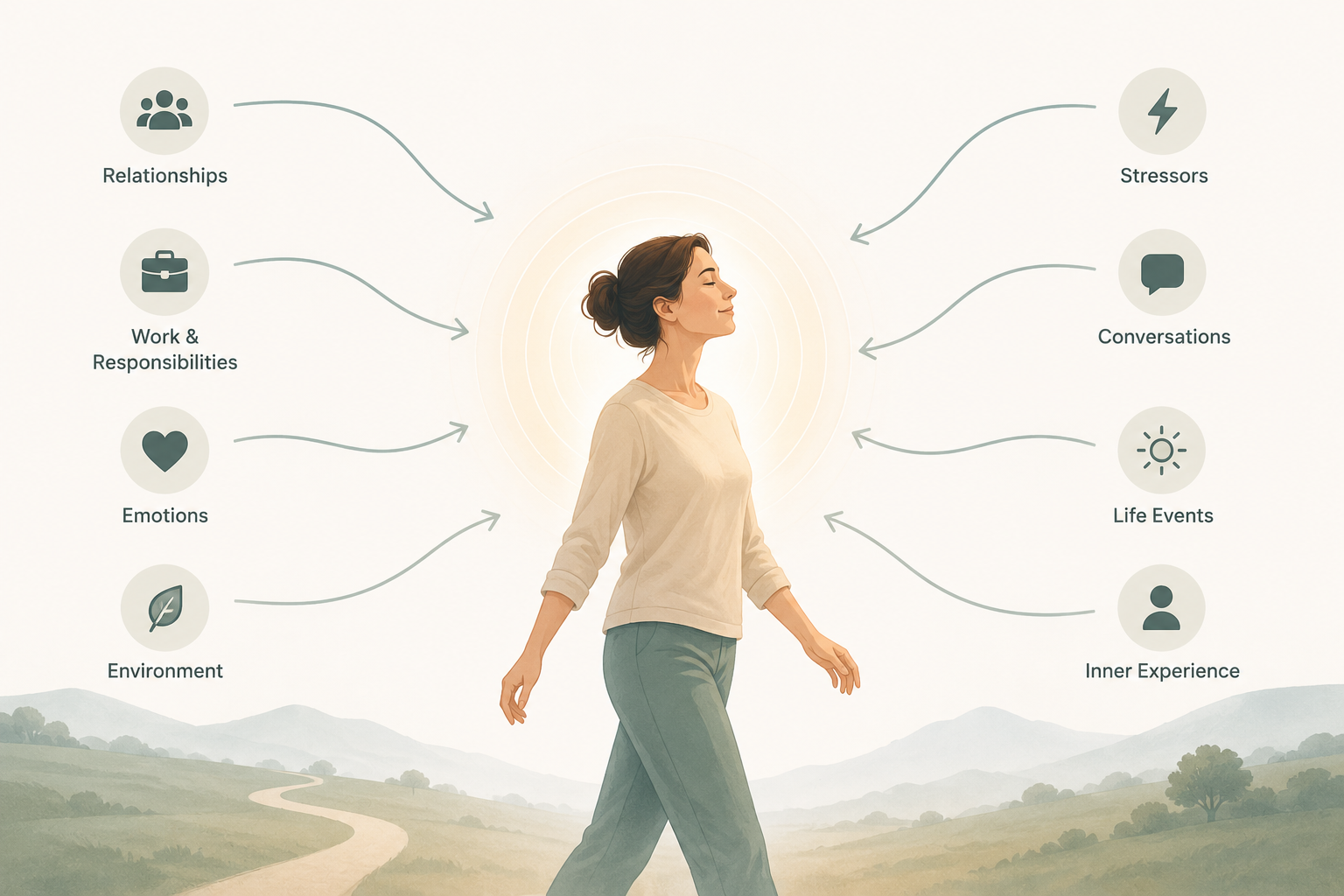
Throughout every day, your body is responding to the life you are living.
It senses what is happening around you and within you, long before your conscious mind has interpreted the situation.
This response is completely natural.
It helps us adapt, communicate and engage fully with life.
Most of the time, these responses are brief.
The body senses.
It responds.
The situation changes.
The activation settles.
Life moves on.
But life continually brings new moments requiring a response.
When the body’s signals are repeatedly recognised and acted upon, each wave of activation can settle naturally.
When those signals are repeatedly overridden, postponed or left unresponded to, the body continues generating fresh activation as new situations arise.
Over time, this repeated pattern can become a Prolonged Activation State (PAS).
Prolonged Activation State is the framework Dr David Mickel uses to explain how ongoing body activation leads to persistent symptoms across multiple body systems.
Prolonged Activation State (PAS) is the framework Dr David Mickel uses to explain why persistent symptoms continue long after an original life challenge has passed.
When activation keeps being renewed...
Most body responses are designed to be temporary.
The body senses what is happening.
It prepares you to respond.
Once that response has happened, the activation naturally settles.
But if the body continues signalling, day to day, waiting for a response…
the activation prolongs.
Over time, the repeated activation becomes prolonged and may begin to affect energy, sleep, digestion, concentration, pain, immune function and many other aspects of health.
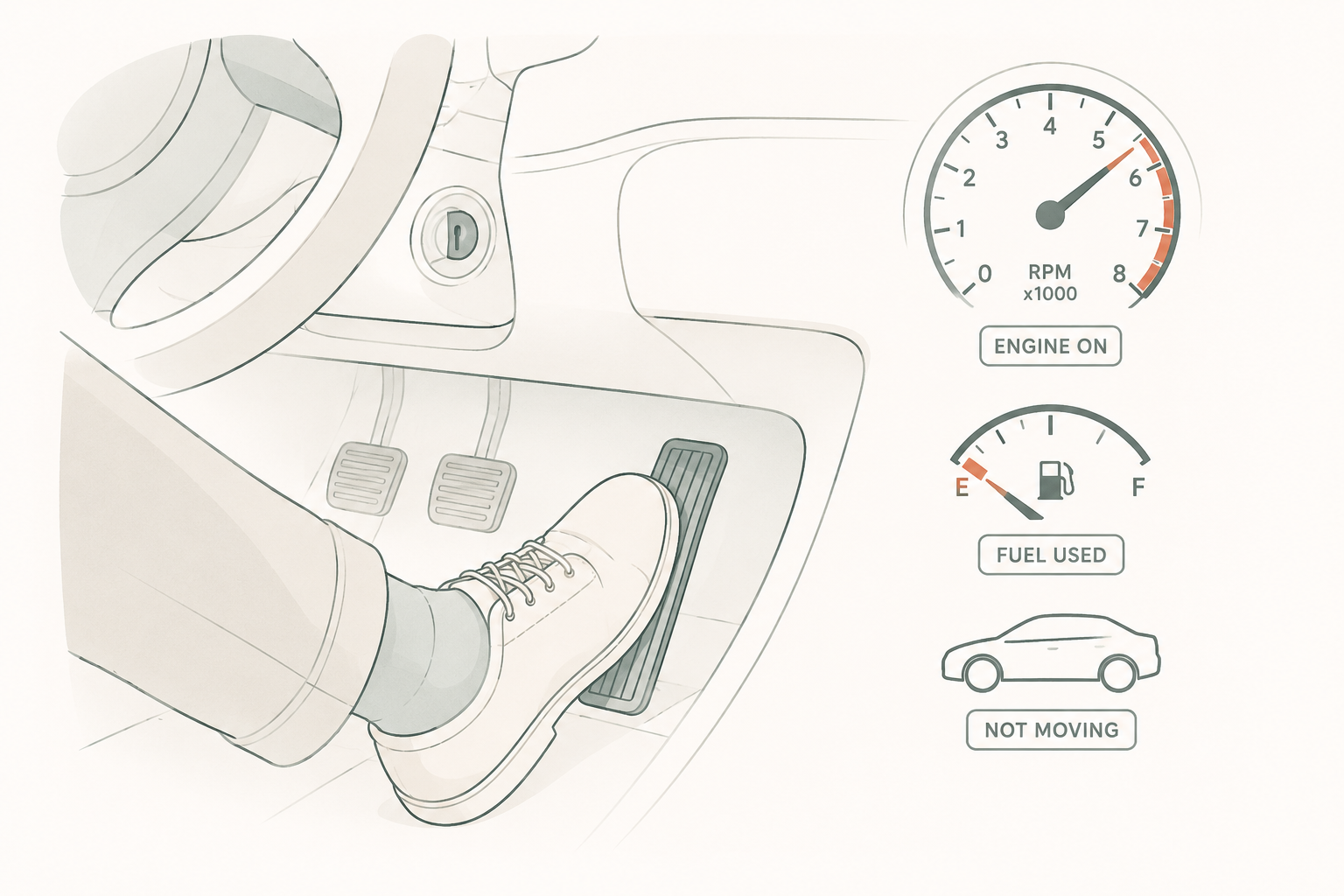
It is a little like sitting in a parked car with your foot resting gently on the accelerator.
The car isn’t travelling anywhere.
But the engine continues working.
Fuel continues being used.
Over time, unnecessary wear begins to occur in the engine.
A Prolonged Activation State is the same.
The body continues using energy long after the original situation has passed.
Activation isn’t the problem.
Activation is one of the body’s healthiest responses.
It prepares us to respond to what life is asking of us.
The problem isn’t that activation occurs.
The problem is that the body repeatedly needs to generate activation because its ongoing signals are not being recognised or responded to.
Each new situation creates a fresh opportunity for the body to communicate.
When those signals are repeatedly overridden, activation gradually becomes prolonged and symptoms begin to appear.
The body isn’t stuck in the past.
It is continually responding to the present.
How Does PAS Develop?
Life continually presents us with situations that require a response.
Sometimes we need to set a boundary.
Sometimes we need to express grief.
Sometimes we need to move towards something that brings genuine fulfilment.
The body naturally generates signals to help guide these responses.
When those signals are recognised and acted upon, activation settles and the body returns to balance.
However, if similar signals are repeatedly ignored, overridden or postponed, the body continues generating fresh activation as new situations arise.
Over time, this ongoing pattern of activation may become prolonged, influencing many different body systems, including the nervous, endocrine and immune systems.
From this perspective, PAS is not maintained simply because of past events.
It is maintained because the body continues responding to present-day life in ways that have not yet changed.
This is why recovery is less about revisiting the past and more about learning to respond differently to the body’s signals as they arise today.
How prolonged activation affects the body
A Prolonged Activation State doesn’t usually affect just one part of the body.
Because activation influences multiple body systems, people may experience a wide variety of symptoms that can appear unrelated but arise from the same underlying state of prolonged activation
Nervous System
Possible experiences include:
• Fatigue
• Brain fog
• Poor concentration
• Dizziness
• Headaches
• Light sensitivity
• Noise sensitivity
• Poor sleep
• Anxiety
• Feeling constantly “on”
Endocrine System
Possible experiences include:
• Reduced resilience to stress
• Hormonal fluctuations
• Temperature regulation changes
• Energy highs and crashes
• Altered appetite
• Reduced recovery
Immune System
Possible experiences include:
• Increased sensitivity after viral illness
• Persistent inflammation
• Allergy-type symptoms
• MCAS-type presentations
• Recurrent infections
• Slower recovery from infections
These systems do not operate independently.
The nervous, endocrine and immune systems communicate continuously with one another.
Within the PAS model, the hypothalamus is considered an important coordinating centre linking the nervous, endocrine and immune systems. When activation becomes prolonged, changes may be observed across all three.
How does activation begin to settle?
Within the PAS model, the body is continually responding to the life we are living.
When those responses are recognised and appropriately acted upon, activation naturally begins to reduce.
This isn’t about trying to eliminate symptoms.
It’s about learning to recognise what the body may be communicating through them.
Over time, people discover that as they respond differently to these signals, the repeated activation reduces and the body begins to settle.
Mickel Therapy® explores how the body’s signals can be recognised and responded to in everyday life.
Frequently Asked Questions
The PAS model doesn’t replace everything we already know about the body.
Instead, it offers a different perspective on why symptoms may persist and how they may begin to change.
Below are some of the questions people ask most often.
How is PAS different from other explanations?
How does PAS relate to Long Covid and ME/CFS?
Does PAS mean the physical changes aren’t real?
Can prolonged activation change?
Watch: What is Prolonged Activation State?
If you’d prefer to watch rather than read, this short video introduces Prolonged Activation State (PAS) and explores how repeatedly renewed activation can contribute to persistent symptoms.

Continue the conversation:
Featured on Raelan Agle’s Recovery Channel
If you’d like to explore these ideas in conversation, Dr Mickel recently joined Raelan Agle for an in-depth discussion about Prolonged Activation State, Long Covid, ME/CFS and recovery.
Watch interview with Raelan Agle